

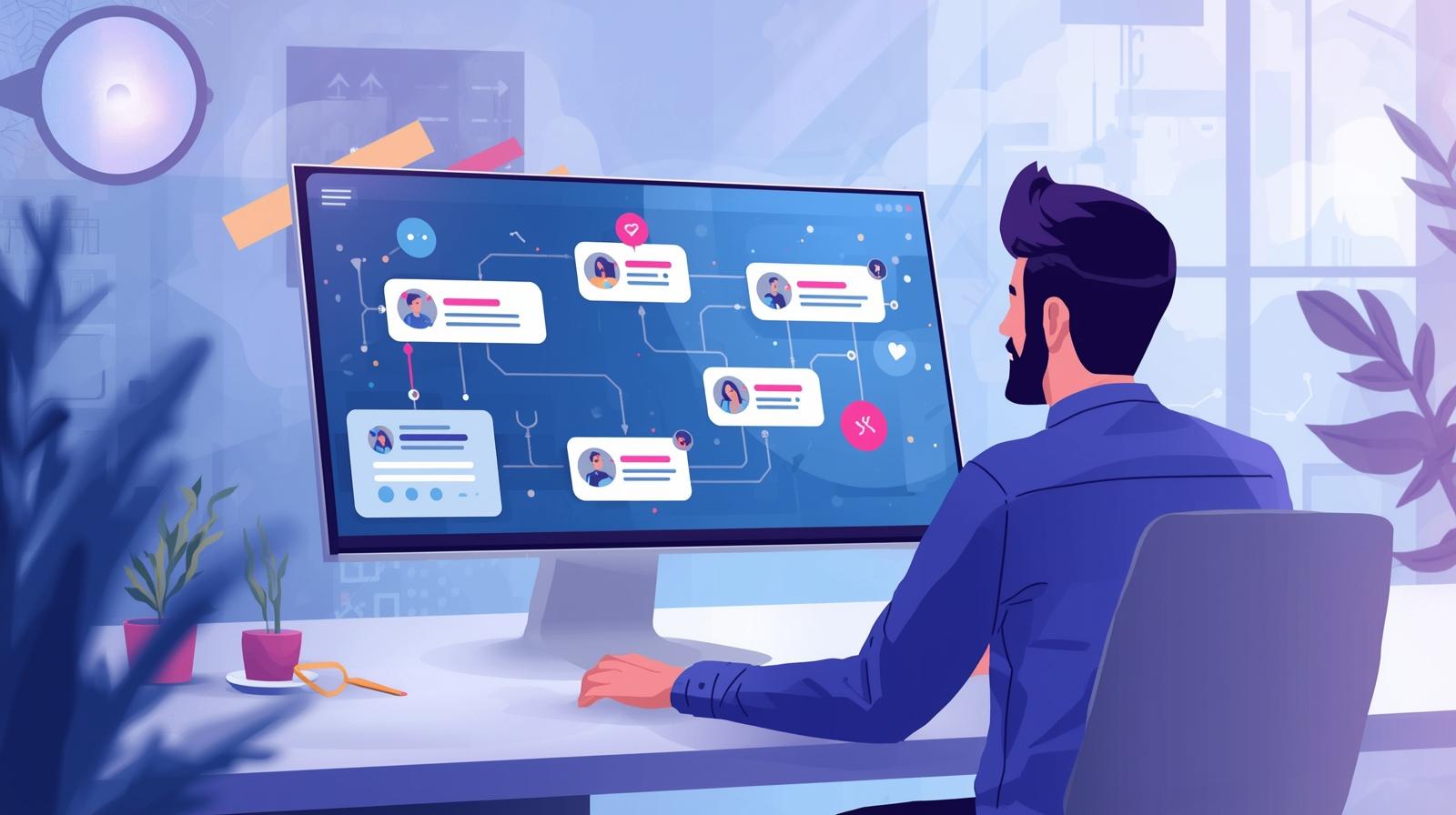
If you’ve ever felt the pressure of onboarding a flood of new hires while juggling 10 other fires, you’re not alone. In my current MSP role, we handle a constant stream of onboarding requests via Thread, a platform purpose-built for MSPs that centralizes client communication, service requests, into a chat interface that our clients use to talk to us. It’s our go-to for chat, some AI, and triggering workflows.
Most outside the MSP world haven’t heard of Thread—but it’s a quiet powerhouse. Instead of forcing users into separate portals or buried tickets, Thread makes it easy to interact with clients directly inside Slack or Teams. That’s why we’re not using Microsoft Forms here. Thread submits onboarding requests straight into Power Automate using an HTTP trigger, which gives us a clean, fast integration.
In the past, onboarding took nearly two full-time employees to keep up. The biggest pain? Human error. Missed job titles, incorrect departments, and forgotten manager assignments. That’s why building an automated onboarding process using a Power Automate HTTP trigger was a game-changer.
Why Automate Onboarding in Power Automate?
For IT managers and techs, onboarding isn’t just about creating a user—it’s provisioning email, Teams access, setting up devices, assigning licenses, and notifying all the right people. Manual checklists and memory just don’t scale.
Here’s what automation gives us:
- Time savings — reclaim hours per week by offloading repeatable steps
- Accuracy — eliminate forgotten fields like department or manager
- Scalability — handle 1 or 100 new hires without burning out staff
Step 1: Set Up the Power Automate HTTP Trigger
Start by creating a new flow in Power Automate:
- Choose “Instant cloud flow” and select “When an HTTP request is received” as the trigger.
- Define the schema you expect from Thread. For example:
{
  "type": "object",
  "properties": {
    "firstName": {"type": "string"},
    "lastName": {"type": "string"},
    "email": {"type": "string"},
    "department": {"type": "string"},
    "manager": {"type": "string"},
    "title": {"type": "string"}
  }
}
- Save the flow to generate the HTTP POST URL.
That URL is what you’ll paste into Thread. Thankfully, Thread makes this easy—hooking it up was painless.
Step 2: Define Your Onboarding Actions
Once triggered, your flow can:
- Create a user in Azure AD or Entra ID
- Assign them to the correct Microsoft 365 group
- Send a welcome email
- Notify the hiring manager
- Kick off a checklist in Teams or Planner
Example Action Flow:
- HTTP Trigger Received
- Create User → Assign Licenses → Send Welcome Email
- Notify Manager via Teams → Log Onboarding in SharePoint
Each action reduces the chance for human error and ensures a consistent experience for every new hire.
Step 3: Optional — Set Up Power Platform Tools in VS Code
If you’re like me and prefer managing logic or tweaking things outside the Power Automate UI, consider setting up the Power Platform extension for VS Code:
- Install the Power Platform Tools from the VS Code marketplace.
- Link it to your environment using the PAC CLI.
- Use it to view, edit, and export your flows.
This isn’t required, but it can save time when managing multiple flows or versions.
Real-World Impact: No More Forgotten Fields
Before automation, we constantly battled small mistakes—forgetting to set a department, missing the title, or not notifying the manager. Even with a checklist, things slipped.
Now, with this automated onboarding process:
- Every field is required in the Thread request
- The flow enforces correct structure and formatting
- Notifications and log entries ensure transparency
This has freed up nearly two full-time employees to focus on higher-value tasks. That alone made the setup time worth it.
Final Thoughts: Automate Once, Save Forever
Automated onboarding doesn’t just save time—it makes your department look like a well-oiled machine. When HR or hiring managers see that everything just works, you earn trust and reduce last-minute chaos.
If your team is still handling onboarding manually, start small. Build one HTTP-triggered flow. Plug it into Thread. Test it on a few hires. You’ll be amazed how quickly you free up your day.
For more reading: Microsoft’s HTTP Trigger documentation.